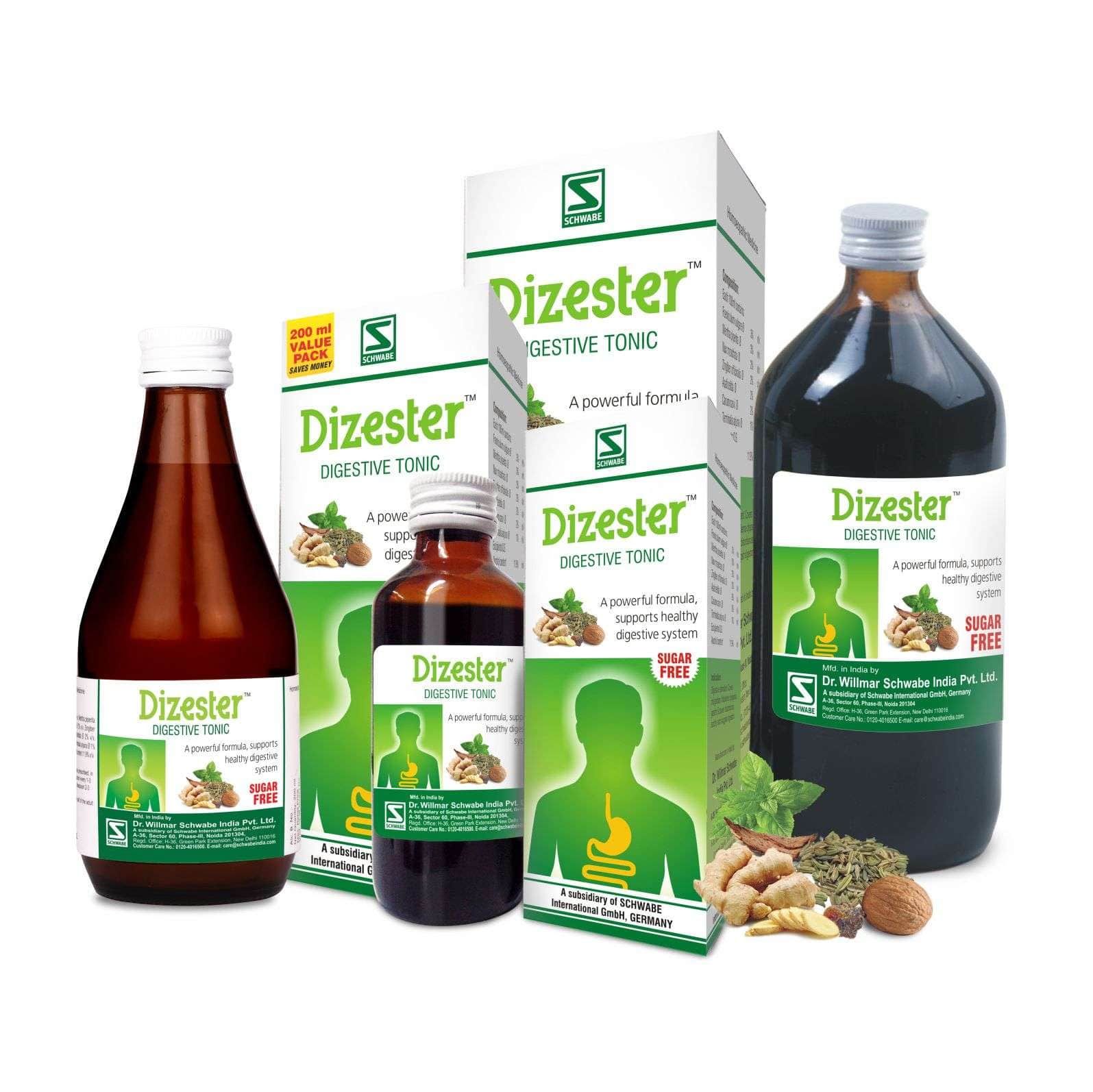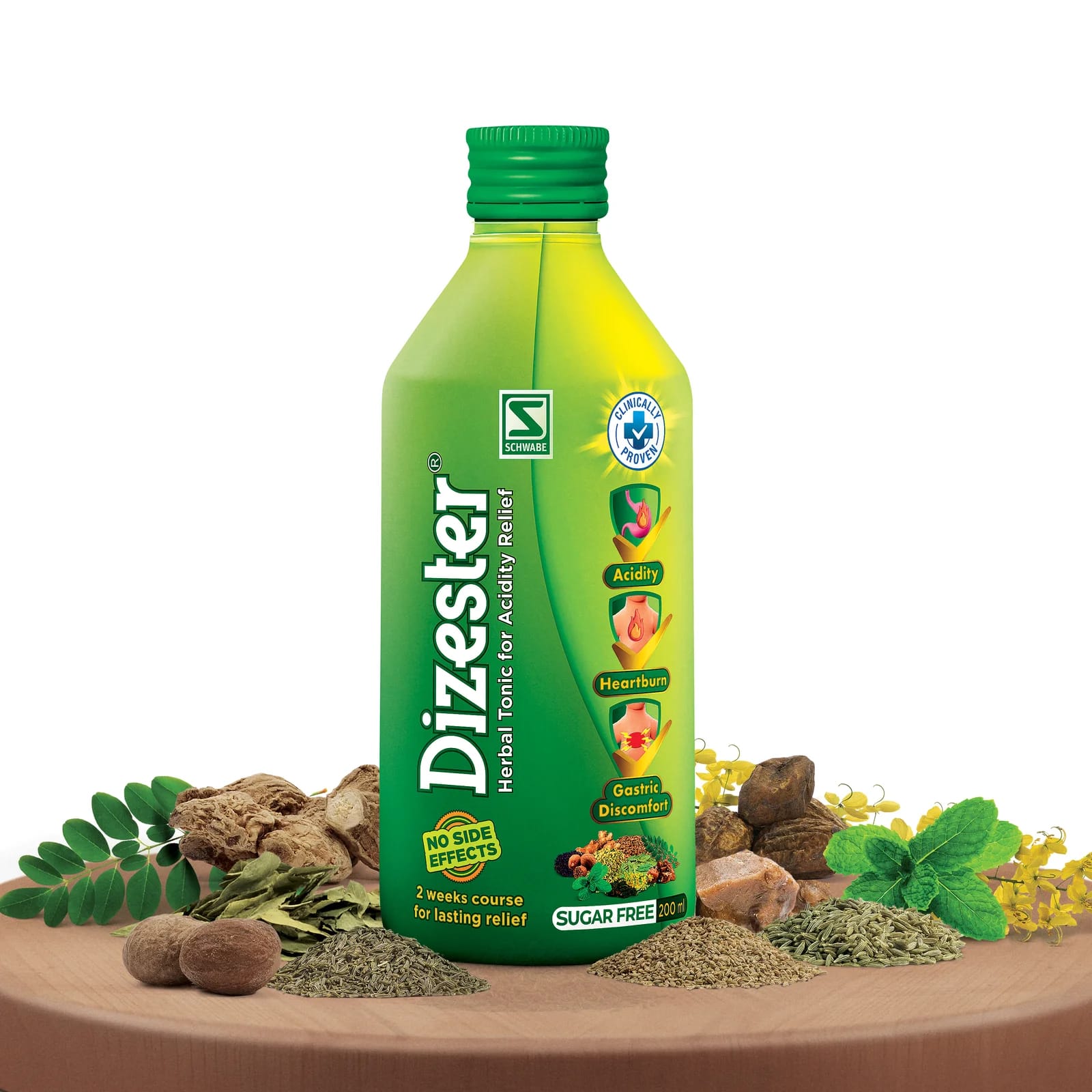





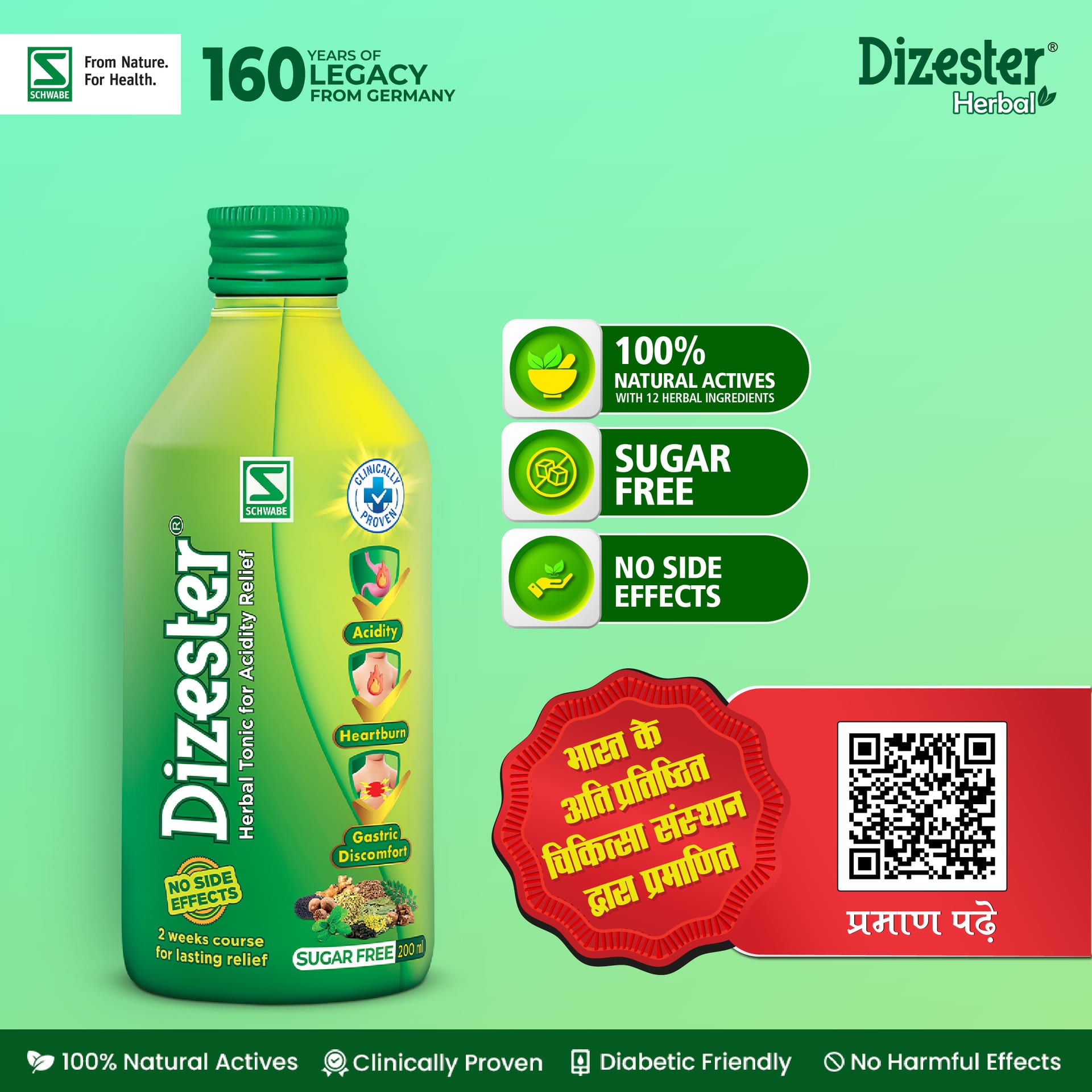
In recent years, Dr Willmar Schwabe India has introduced a variety of speciality products and ranges such as the Kindi Range, Pentarkan Range, Topi Range, etc. Aside from homeopathic medicines, dilutions and speciality products, it also markets many cosmetic and healthcare products. In line with such successful ventures, Schwabe India has set its foot in herbal tonics and medicines. Dizester Herbal is the latest introduction from this 150-year-old natural health product organization, which has proved to be as good as its previous successful launches.
In accordance with the present lifestyle and food habits, Dizester Herbal has been formulated with the aim to help the increasing number of cases related to digestive problems. It is a syrup-based Herbal tonic for digestion that helps to relieve symptoms of indigestion and other related digestive disturbances. The constituents of Dizester Herbal tonic have antispasmodic and carminative, diuretic, and anti-inflammatory properties and it protects the gastric mucosa.
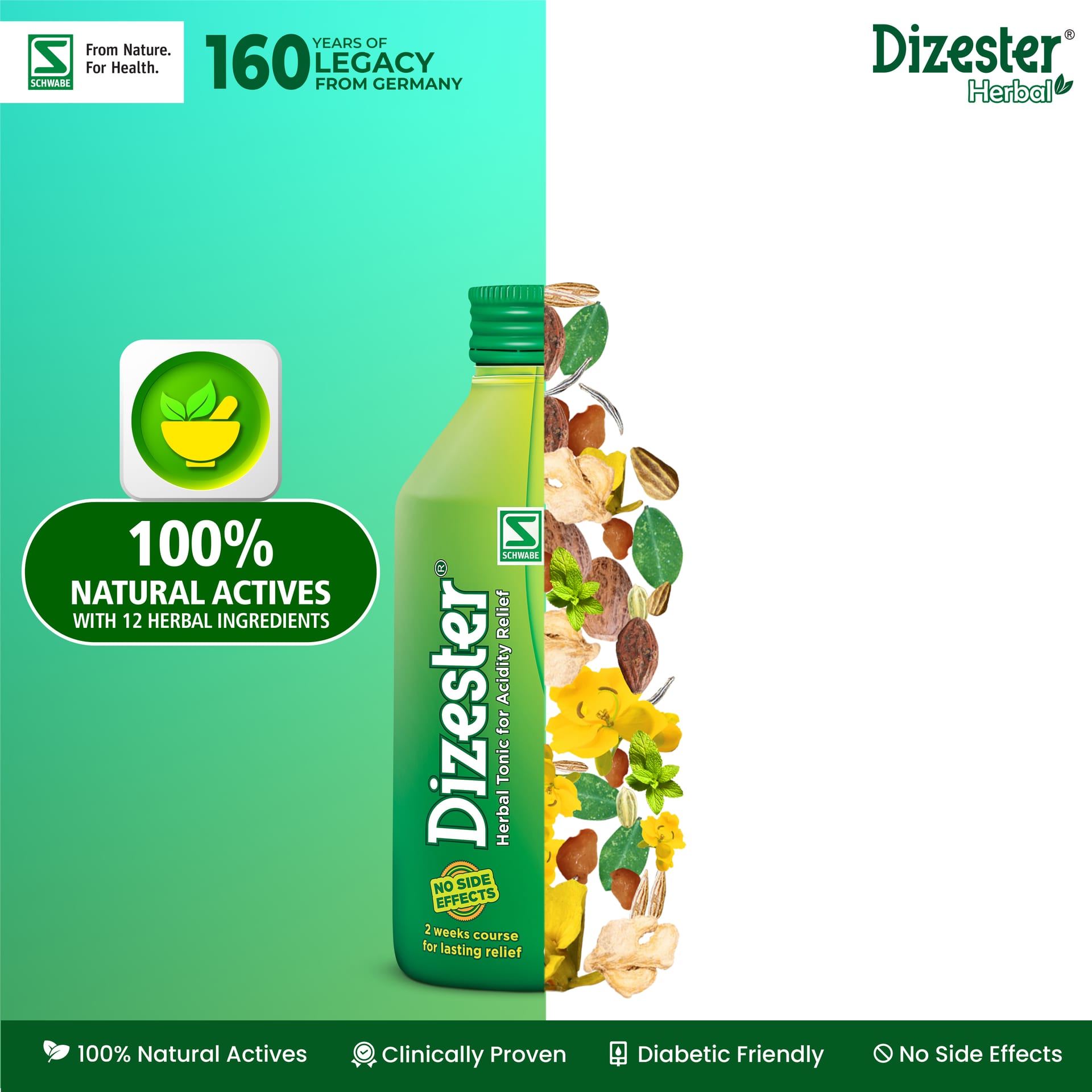
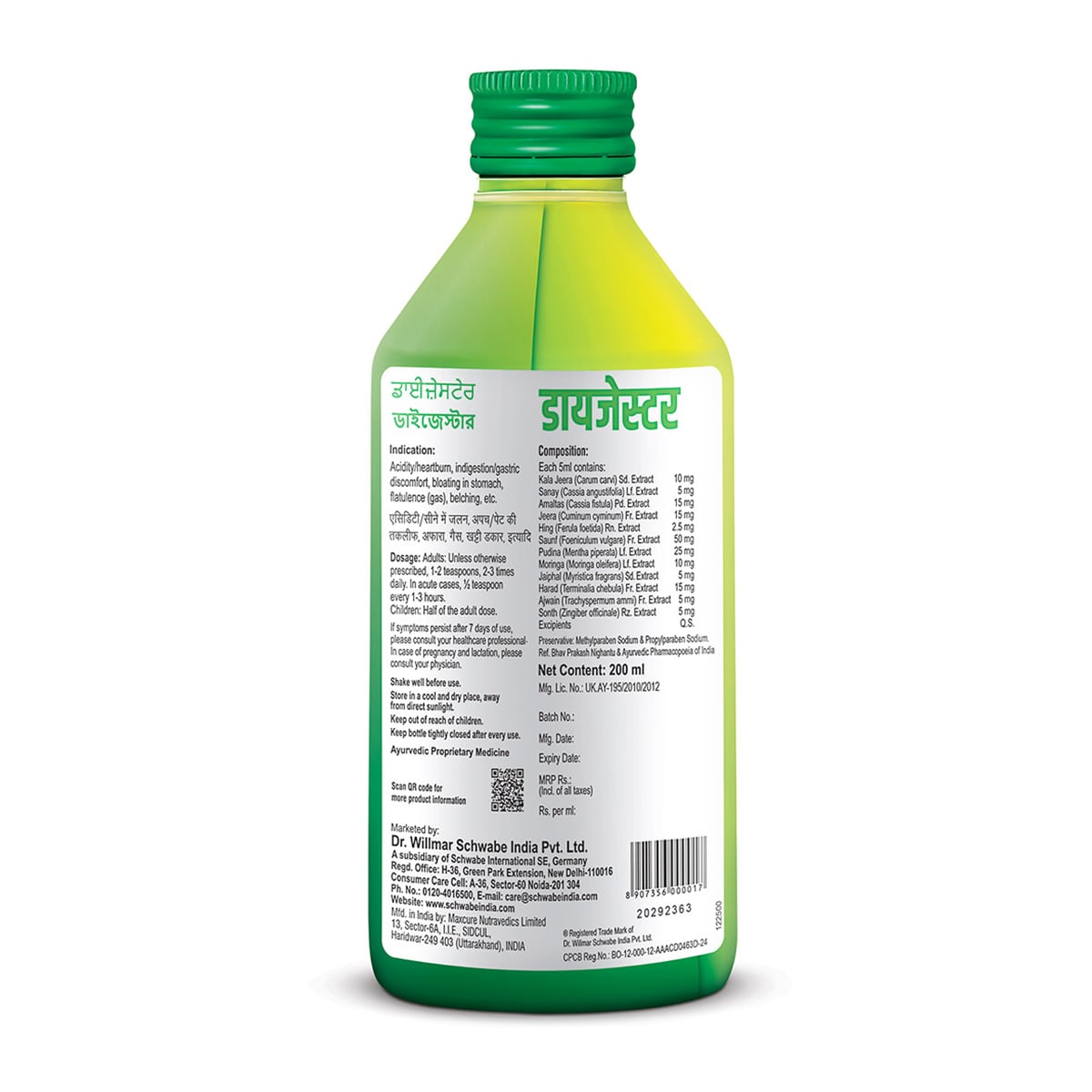
Dizester Herbal tonic contains Kala Jeera (Carum carvi), Sanay (Cassia angustifolia), Amaltas (Cassia fistula), Jeera (Cuminum cyminum), Hing (Ferula asafoetida), Saunf (Foeniculum vulgare), Pudina (Mentha piperita), Moringa (Moringa oleifera), Jaiphal (Myristica fragrans), Harad (Terminalia chebula), Ajwain (Trachyspermum ammi) and Sonth (Zingiber officinale). These herbs have been used as traditional home remedies in India from centuries ago and everyone is aware of their effectiveness in treating and managing common indispositions.
Digestive system and Common digestive disorders
Digestion is the process of breaking down food into many nutrients, which can be absorbed and assimilated in the intestines. It is a very important function in our body because it provides the energy to the body for growth and various other important functioning of other body systems.
The digestive system consists of the mouth, oesophagus, stomach and intestines and the associated organs like the liver, pancreas, and gallbladder that help the body in digesting food. Any problems with any of these organs and their functions can lead to many digestive disorders. These digestive disease conditions vary from mild to severe.
Gastrointestinal disorders include conditions such as gastritis, lactose intolerance, reflux diseases, constipation, irritable bowel syndrome, hemorrhoids, anal fissures, perianal abscesses, anal fistulas, perianal infections, diverticular diseases, colitis, polyps and cancer. Other conditions associated with digestive disorders are:
- Disorders of gall bladder such as gallstones, cholecystitis, and cholangitis
- Ano-Rectal problems, such as hemorrhoids, anal fissures and rectal prolapse
- Lesions in oesophagus such as stricture, varices, achalasia and esophagitis
- Gastritis, gastric ulcers, cancer, gastroesophageal reflux disease (GERD), peptic ulcer disease, hernias, etc.
- Liver disorders like hepatitis, cirrhosis, liver failure, etc
- Pancreatic diseases such as acute or chronic pancreatitis, pancreatic cyst and pancreatic tumours
- Intestinal disorders such as severe bacterial or viral infections, inflammatory conditions, celiac disease, Crohn disease, ulcerative colitis, diverticulitis, and intestinal ulcers. malabsorption syndrome, intestinal ischemia, etc.
Diagnosis and treatment
The problems of the digestive system can be identified by the patient's symptom manifestations. But to confirm and clarify the disease certain tests and examinations are needed to be done. As most symptoms are common to various problems, it is best to conduct these tests to identify the specific organ related to the problem and treat it accordingly.
Some of the basic tests for gastrointestinal problems include barium X-rays, endoscopy, ultrasound, endoscopic retrograde cholangio-pancreatography (ERCP), and endoscopic ultrasound and colonoscopy. A proper screening also should be done to rule out cancers if the symptoms are very severe in nature.
Factors which increase the digestive problems
- Intake of a diet that is low in fiber.
- Sedentary lifestyle.
- Irregular food habits.
- Not taking food at the proper time.
- Lack of physical activities such as exercise and walking.
- Sudden change in the daily routine.
- Intake of very spicy, rich and oily foods.
- Increased intake of dairy products.
- Increased stress.
- Resisting the urge to use the toilet.
- Overuse of laxatives.
- Certain medications such as iron tablets, antidepressants and painkillers can affect digestion and bowel movements.
Symptoms of common digestive problems
Some of the general symptoms of digestive diseases are abdominal pain, bloating, flatulence, loss of appetite, sour taste, hiccups, nausea, etc. But usually, most of the patients refer to any problem related to the gastrointestinal system as indigestion. What the patient refers to as a problem of indigestion can include a wide range of symptoms such as:
- Changes in bowel habits
- Abdominal pain and cramps
- Excessive flatulence
- Bloating of abdomen
- Constipation
- Incontinence of stool
- Diarrhea
- Gastric headache
- Heartburn
- Regurgitation
- Difficulty in swallowing
- Aphthous ulcers
- Pain and heaviness of the chest
- Sour taste in the mouth
- Persistent nausea
- Vomiting
- Loss or increased appetite
- Loss or gain of weight
- Incomplete bowel movement
Some of the signs and symptoms can indicate a serious condition and might need immediate medical attention. These symptoms may be due to oesophagial varices, severe infection, gastric ulcers, duodenal ulcers, gallstones, hepatitis, cancer, etc. They are: Spitting of blood
- Bleeding per rectum
- Sudden unexplained loss of weight
- Continuous vomiting and diarrhea
- Dehydration
- Severe abdominal cramps
- Incontinence
- Nausea and vomiting
- Alternate constipation and diarrhea
- Bleeding from the digestive tract
Prevention and management of digestive problems
Most of the common digestive problems such as indigestion, flatulence, heartburns, etc happen due to the kind, amount and time of eating food. Such minor problems can be averted by managing the lifestyle and following healthy food habits. Some of the ways to avoid these digestive troubles are:
- A balanced diet and proper nutrition.
- Proper intake of food at regular intervals.
- Maintaining a proper eating routine.
- Intake of food that is rich in fibre such as fruits, salads, whole grains, etc.
- Regularizing bowel habits.
- Avoid eating fast foods, junk foods and spicy foods.
- Avoid rich and fried foods.
- A good sleep.
- Avoiding unnecessary stress.
- Regular exercises will increase bowel movements.
- Practising different postures of yoga that could help in increasing bowel movements.
- Avoid resisting the urge to use the toilet.
- Avoiding too much caffeine.
- Avoid smoking and alcohol.
- Drinking lots of water.
- Avoid taking laxatives.
Uses and benefits of Dizester Herbal in digestive and liver complaints
Dizester Herbal tonic for Digestive Problems is a completely herbal product that can be safely and regularly used for symptoms such as problems with digestion, indigestion, flatulence, heartburns, acidity, regurgitation of food to the throat, bloating of the abdomen, abdominal cramps and pains related to digestion, etc. It is a mild and safe herbal aid to digestion and an appetizer.
It not only takes care of digestive troubles but is also a herbal digestive tonic for the liver and gall bladder that helps to prevent sedimentation of bile, and the formation of gallstones, useful in relieving bilious colic and bilious vomiting and in the treatment of fatty liver.
There is another homeopathic herbal liver tonic Dizester that stimulates the functions of the liver, its metabolism and its secretions. It detoxifies the liver and speeds up the digestive process and absorption. It can be used in the management of various conditions along with classical medical treatment. It is also useful in children in relieving diarrhoea, constipation, abdominal colic and worm infestations. It improves the appetite, improves digestion, absorption and assimilation of nutrients and minerals in children.
MANUFACTURED IN INDIA BY
COUNTRY OF ORIGIN
REGISTERED OFFICE ADDRESS
SHELF LIFE / EXPIRY
REMEDY CLASSIFICATION & POTENCY FAMILY
PHARMACOPOEIA & QUALITY STANDARDS
Unless otherwise prescribed by the physician, 5-10ml (1-2 teaspoon) 2-3 times a day preferably after meal. Children to be given half of the adult dose. If required it can be taken with normal water.
It is an era where everything has to happen fast. Fast eating, fast food, is true in cases of foods and snacks. Indigestion and related problems are on the rise.
Many ready-to-prepare instant food items have occupied significant space in our food habits. Instead of preparing Diwali and other festival snacks at home, most people prefer to get mass-made commercial sweets and food items generally without quality checks, and snack packages containing unwanted preservatives and taste enhancers. The frequency of dinner outings has increased.
Every time one goes out, snack-pack pick-up by children is common. Healthy snacks like boiled sprouts are replaced by prepared branded or unbranded snacks. These taste enhancers make us eat more.
It makes it more difficult for our digestive system to digest them. Keeping these altered lifestyles in mind; Schwabe has developed a new product Dizester Herbal to aid digestion. It is equally useful in cases of sluggish digestion and sluggish liver function.
Altered food habits and role of Dizester Herbal: Many people don't have enough time to prepare food at home. This leads to an increase in the proportion of junk foods. Over time, people develop a liking for them.
This goes on. It becomes a habit, unaware of the consequences. According to reports (Sanjay Kalra et al. 2012), many people in major cities eat and drink frequently unhealthy foods containing trans-fats like chips, burgers, pizzas, french fries, noodles, and colas.
Many of these have unwanted effects on the digestive system resulting in acidity, indigestion, flatulence dyspepsia, gastric & bowel disturbances, and related secondary effects such as urinary & respiratory troubles, weak immunity, and allergic problems.
Dizester Herbal is developed to overcome these problems. Dizester Herbal covers bloating, deranged digestion, flatulence dyspepsia, different types of colic pain like flatulent colic and bilious colic with great accumulation of gas, nervous irritation of the intestinal tract (IBS), diarrhoea, loss of appetite.
It improves the weak digestive system. Useful in acidity. Pain in the stomach area due to gastritis or gastric ulcer. It covers diarrhoea with or without flatulence.
Its ingredients are known drugs for flatulence and spasmodic contraction of the stomach and oesophagus sometimes with reverse peristalsis. Difficulty in bringing the bloating out.
Flatulence and regurgitation of liquid. Forcible eructation of gas. Covers obstinate constipation. Dizester Herbal has clinically proven ingredients for their antispasmodic and carminative actions and improving appetite.
It has a soothing effect on the digestive tract. It also works as a diuretic, anti-inflammatory, and protective against gastric mucosal lesions.
Composition:
Each 100ml contains
- Kala Jeera (Carum carvi) Sd. Extract - 10 mg
- Sanay (Cassia angustifolia) Lf.Extract - 5 mg
- Amaltas (Cassia fistula)Pd. Extract - 15 mg
- Jeera (Cuminum cyminum) Ft. Extract - 15 mg
- Hing (Ferula asafoetida)Rn. Extract - 2.5 mg
- Saunf (Foeniculum vulgare) Ft. Extract - 50 mg
- Pudina (Mentha piperita) Lf. Extract - 25 mg
- Moringa (Moringa oleifera) Lf.Extract - 10 mg
- Jaiphal (Myristica fragrans) Sd. Extract - 5 mg
- Harad (Terminalia chebula) Ft. Extract - 15 mg
- Ajwain (Trachyspermum ammi) Ft. Extract - 5 mg
- Sonth (Zingiber officinale) Rz. Extract - 5 mg
- Excipients Q.S.
Proven indications of the individual ingredients in the sphere of claimed action:
Kala Jeera (Carum carvi): It is antispasmodic and carminative thus soothes the digestive tract acting directly on intestinal muscles. Relieves colic, bloating, and flatulence. It improves appetite and acts as a tonic. The benefits of intestinal spasm and flatulence have been proven by research.
Sanay (Cassia angustifolia): For a long time it has been used for constipation as a laxative. It is being used for children suffering from flatulence. It is also reported to be useful in hepatomegaly and splenomegaly with tenderness.
Amaltas (Cassia fistula): It is indicated in intestinal ulceration, and liver diseases and as a laxative. It is indicated for the constipation associated with bilious complaints. Flatulence, belching, loss of appetite, fullness of abdomen are covered by this remedy.
Jeera (Cuminum cyminum): In a recent study it was found that Cuminum cyminum has the property to increase the release of bile from the liver. A study reported that it improves the irritable bowel syndrome (IBS). It increases the activity of digestive enzymes, potentially speeding up digestion.
Hing (Ferula asafoetida): The flatulence and spasmodic contraction of the stomach and oesophagus with reverse peristalsis are covered by this ingredient. Great difficulty in bringing up bloating. Flatulence and regurgitation of liquid. Forcible eructation of gas. Pulsation in the pit of the stomach. Violent colic; cutting and burning in the stomach and region of diaphragm. Gurgling and rolling of gas, which escapes afterward with loud and difficult eructation. Obstinate constipation. Diarrhoea is sometimes extremely offensive.
Saunf (Foeniculum vulgare): Foeniculum vulgare is widely used as carminative, digestive, and lactogogue, in treating respiratory and gastrointestinal disorders. It covers bloating, indigestion, and gastric problems. In children, it is useful for abdominal colic and flatulence. Studies reveal that it relieves bloating acts as antispasmodic, stimulates appetite, and works as a diuretic and anti-inflammatory. In a recent study, it has shown a protective effect against ethanol-induced gastric mucosal lesions.
Pudina (Mentha piperita): It is indicated in flatulent colic, deranged digestion, infantile colic, and bilious colic with great accumulation of gas.
Moringa (Moringa oleifera): It is used as a potential antioxidant, anticancer, anti-inflammatory, antidiabetic, and antimicrobial agent. In a study it was found that Moringa decreased acidity in gastric ulcers by a percentage of 86.15% and 85.13%. The presence of polyphenols in moringa reduces the liver fibrosis and reverses the oxidation.
Jaiphal (Myristica fragrans): It is useful in flatulent dyspepsia, nervous irritation of the intestinal tract, diarrhoea when the stools are soft and like chopped eggs, and loss of appetite.
Harad (Terminalia chebula): It has been used as a laxative for a long time in Ayurveda to improve bowel movement. It is also used in dysentery and diarrhoea. The presence of tannin in Terminalia chebula protects the gut from infection and irritation and tends to reduce intestinal secretion. It is also helpful to reduce heartburn and indigestion.
Ajwain (Trachyspermum ammi): It helps to fight against harmful bacteria like Escherichia coli and Salmonella. It is a well-known home remedy for indigestion, flatulence, stomach pain, etc. The study established its efficacy in peptic ulcers. It improves delayed stomach emptying. Its anti-inflammatory effects may help in IBS or inflammatory bowel disease.
Sonth (Zingiber officinale): It covers the weak digestive system. Indicated in the heaviness of the abdomen. Useful in acidity. Heaviness in the stomach on awakening with gas and rumbling. Pain in the stomach area due to gastritis or gastric ulcer especially worse eating. Used in colic, diarrhoea with extremely loose bowels, with much flatulence, cutting pain, hot, sore, painful anus, especially during pregnancy. Chronic intestinal catarrh. Anus red and inflamed. Haemorrhoids are hot, painful, and sore.
Dosage: For adults 1/2 teaspoon every 1-3 hours, subsequently 1-2 teaspoons 2-3 times daily, Children should be given half of the adult dose or as suggested by the physician.
Side effects: No side effects of Dizester Herbal are known.
Contra-indications: No contra-indications for the use of Dizester Herbal are known.
Interactions: No interactions between Dizester Herbal and other products are known.
Presentation: Bottle of 200 ml.
You might also want to check out these products.