

Breast Health: Warning Signs, Self-Awareness & Preventive Care

Most people know their own body better than anyone else does, even if they've never put it into words. You know how your knee feels after a long walk, or how your skin reacts to a change in weather. Breast health works the same way. The more familiar you are with what's normal for you, the easier it becomes to notice when something shifts.
Breasts change constantly throughout life, often for entirely harmless reasons tied to hormones, age, pregnancy, or simple day-to-day fluctuation.
At the same time, some changes genuinely deserve a closer look, and knowing the difference is what this guide is about.
Why Breast Health Awareness Actually Matters
Puberty, monthly cycles, pregnancy, breastfeeding, weight changes, and menopause all leave their mark on breast tissue in different ways. It isn't always obvious which of these shifts are simply part of a life stage and which deserve closer attention.
A quick look at how these stages tend to show up
|
Life Stage |
Typical Breast Change |
|
Puberty |
Tissue development, occasional tenderness |
|
Menstrual cycle |
Swelling and tenderness before periods |
|
Pregnancy and breastfeeding |
Changes in size, firmness, and sensitivity |
|
Menopause |
Tissue becomes less dense, texture shifts |
Patterns like these are exactly why a fixed checklist rarely works well here. What counts as normal for you shifts as you move through these stages yourself, which is precisely the point.
This is really what breast health awareness comes down to. It isn't about memorising a checklist or performing a rigid technique every month. It's simply about knowing your own baseline well enough that anything new or unusual stands out on its own, which also makes conversations with a doctor far more useful than a vague sense that something feels off.
Breast Cancer in India: Why the Numbers Matter
According to the ICMR National Institute of Cancer Prevention and Research, breast cancer is the most commonly diagnosed cancer among women in India, accounting for around 27% of all female cancer cases, and roughly 1 in 28 women is likely to develop it during her lifetime.
Numbers like these can feel alarming, but they aren't a reason to worry about every symptom. What they do point to is the value of paying attention early. Government survey data adds another layer to this picture worth knowing:
|
Data Point |
What It Tells Us |
|
Breast cancer accounts for ~27% of female cancers in India |
It remains the most frequently diagnosed cancer in Indian women. |
|
Roughly 1 in 28 women may develop it in her lifetime |
Risk is real but far from a certainty for any individual. |
|
Screening uptake remains low nationally, per NFHS data |
Many women are not undergoing recommended checks. |
None of this is meant to cause alarm. It simply makes the case that awareness and timely evaluation matter, without requiring anyone to assume the worst about every change they notice.
What Counts as a Normal Breast Change?
Not every change is cause for concern, and honestly, most aren't. Breast tissue is naturally dynamic, responding to hormones and life stages in ways that can feel unpredictable if you're not expecting them:
-
Tenderness or swelling before your period
-
Lumpiness that comes and goes with your cycle
-
Shifts in size, shape, or firmness during pregnancy or breastfeeding
-
Gradual changes in texture as you get older
-
Some breasts simply feeling denser or more nodular than others, as a baseline
The goal isn't perfect symmetry. It's noticing what's typical for you, so you can spot the moment something departs from that pattern.
Breast Changes That Are Worth a Closer Look
A handful of specific changes fall into a different category, not because they always mean something serious, but because they warrant a professional opinion rather than a guess. These tend to stand apart from ordinary fluctuation in a fairly recognisable way:
|
Change |
How It Differs From Normal Fluctuation |
|
A new lump |
Wasn't there before and doesn't come and go with your cycle |
|
Sudden change in size or shape |
Especially when it affects only one side |
|
Skin changes |
Persistent redness, thickening, or dimpling that lingers |
|
Nipple changes |
Newly inverted or producing unexplained discharge |
|
Persistent pain |
Localised to one spot and doesn't ease with your cycle |
A new breast lump tops that list, and understandably so, though most turn out to be cysts, fibroadenomas, or other non-cancerous growths rather than anything sinister.
None of these automatically mean something serious. What they have in common is that a change on its own rarely tells you much, while a doctor's opinion usually does.
Recognising Breast Cancer Warning Signs
It helps to have a clear picture of what falls under breast cancer warning signs, if only so you know what's genuinely worth flagging to a doctor. None of the following automatically point to cancer, but each one calls for a proper evaluation rather than a guess.
|
Warning Sign |
Notes |
|
A new lump or thickened area |
Most are benign, but all deserve assessment |
|
Dimpling or puckering of the skin |
Can resemble the texture of an orange peel |
|
A nipple that newly turns inward |
Different from nipples that have always been inverted |
|
Unexplained nipple discharge |
Particularly if it’s spontaneous or blood-tinged |
|
Swelling in the underarm area |
Sometimes overlooked as unrelated |
Seeing this on a list can make it feel more urgent than it needs to. In practice, most people who get one of these signs checked find it isn't cancer. The value of the list is recognising when a proper check makes sense, not causing worry.
Self-Awareness Is Not the Same as Self-Diagnosis
There's an important distinction between breast self-awareness and trying to diagnose yourself, and it's easy to blur the two. Self-awareness looks like this:
-
Knowing your own normal, texture and all
-
Noticing when something is different
-
Giving a change a reasonable amount of time before assuming the worst
-
Actually booking an appointment when something persists
What it doesn't involve is deciding a lump is "probably nothing" without ever getting it looked at, or swinging the other way and treating every change as a crisis. Both extremes skip the one step that actually resolves the uncertainty: a professional opinion.
Understanding Breast Health Screening
Breast health screening refers to checks designed to catch potential issues before they become noticeable on their own, and the right approach varies by age, family history, and personal risk factors. Broadly, the options include:
|
Screening Method |
What It Involves |
|
Clinical breast examination |
A physical check carried out by a healthcare professional |
|
Mammography |
Imaging used to detect changes not always felt by hand |
|
Ultrasound |
Often used alongside mammography when needed |
|
Follow-up imaging |
Recommended when something needs a closer look |
Government survey data show that screening uptake in India remains lower than it should be, with participation notably higher in urban areas than in rural areas. There's no single deadline for when to start, but the earlier the conversation with a doctor happens, the more useful it tends to be.
Everyday Habits That Support Breast Health
While no single habit can guarantee prevention, a handful of everyday choices are consistently recommended as part of general wellbeing, breast health included:
-
Staying physically active on a regular basis
-
Eating a varied diet with plenty of fruits, vegetables, and whole grains
-
Avoiding tobacco in any form
-
Keeping alcohol consumption within recommended limits
-
Attending routine health check-ups rather than skipping them
-
Simply paying attention when something feels different
These breast health tips aren't complicated, and that's rather the point. Consistency matters more here than intensity.
Who Should Pay Extra Attention?
Everyone benefits from basic breast care, but a few groups have reason to be a little more vigilant and raise the topic proactively with a doctor:
-
Those with a family history of breast cancer
-
Individuals with known inherited genetic factors
-
Anyone with a personal history of breast conditions
-
People with other risk factors flagged during a medical visit
Having a risk factor doesn't guarantee anything will happen, and having none doesn't guarantee the opposite, which is exactly why awareness still matters for everyone.
Why More Women Are Turning to Homeopathy for PCOD/PCOS Treatment
When Should You Actually See a Doctor?
If a change is new, persistent, or simply doesn't sit right with you, it's worth having it looked at rather than waiting it out. Book an appointment if you notice:
-
A new lump or unusual thickening
-
Changes in breast shape or size that weren't there before
-
New nipple changes or unexplained discharge
-
Skin changes that don't resolve within a couple of weeks
-
Ongoing pain focused in one area
-
Anything else that's simply causing you concern
Seeing a doctor early doesn't mean assuming the worst. It just means getting a clear answer instead of living with uncertainty.
The Bottom Line
Good breast health isn't built on fear or constant vigilance. It's built on familiarity, a working knowledge of your own body, and a willingness to get things checked when something changes.
Most breast changes turn out to be completely benign, and that's worth remembering every time something feels new or unfamiliar. The goal was never to eliminate every worry, but to replace guesswork with information and hesitation with a phone call to a doctor when warranted. Through steady breast health awareness, sensible breast health screening, and attention to genuine breast cancer warning signs, this part of health becomes far less daunting than it first appears.
Disclaimer: This article is intended for general educational purposes only and should not be considered medical advice. Any new, persistent, or concerning breast symptoms should be evaluated by a qualified healthcare professional.
More Articles
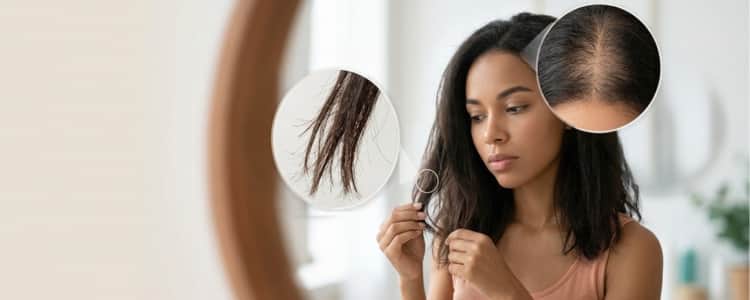
Hair Breakage Vs. Hair Loss: Why Knowing The Difference Matters
Understand how hair breakage differs from hair loss, what causes each, the signs to watch for, and simple hair-care habits that can help protect hair health.

Brain Fog vs. Poor Concentration: What's the Difference?
Brain fog and poor concentration can feel similar but have different causes. Learn how to recognize the symptoms, understand triggers, and improve mental focus.

When Does Everyday Tiredness Become Chronic Fatigue?
Discover the difference between normal tiredness and chronic fatigue, explore possible causes, and learn when persistent exhaustion needs medical attention.

7 Bedtime Drinks That May Support More Restful Sleep
Learn about seven soothing bedtime drinks that may promote relaxation, support better sleep quality, and help you unwind before bedtime.

Digital Eye Strain: Why Your Screens May Be Hurting Your Eyes
Discover how prolonged screen time causes digital eye strain, its common symptoms, and practical ways to reduce discomfort and protect your eye health.

10 Foods That May Help Maintain Healthy Vitamin D Levels
Learn about 10 nutrient-rich foods that may help maintain healthy vitamin D levels and contribute to strong bones, muscle function, and immune health.