
Corona Virus Outbreak – Risks, Symptoms, and Precautions

Introduction
As we are all aware, the entire world is currently undergoing a situation hardly predicted or anticipated before. As on May 20th, 2020, the global coronavirus count is over 4 million cases, and there have been more than 300 thousand deaths. As the scientific world races to find a vaccine for this pandemic, we should remember that being well-informed is the key to being safe. Read on to equip yourself with relevant knowledge to keep yourself and your loved ones safe.
What are the various Risks of Corona Virus?
The risk of contracting coronavirus is not the same for everyone. How much of a risk exists for an individual depends upon multiple factors like age, occupation, health status, lifestyle and habits, as well as the degree of exposure to infected people. It is clear that the risk is higher for people with pre-existing health conditions. Serious risk exists for people over the age of 65 years. People who are permanent residents of nursing homes or under long-term care are more prone to being infected and the mortality rate also remains significantly higher for them.
Also Read How to Boost your Immune System
People of all ages who have underlying medical conditions are at an increased risk of contracting covid19. This is more so in people whose medical problems are particularly not well controlled. People with chronic lung disease, and those suffering from moderate to severe asthma, remain at a higher risk. This is because covid19 particularly attacks the lungs and causes respiratory distress. Those who have severe heart conditions, chronic kidney disease, diabetes or hypertension also fall under the high-risk bracket. People with chronic kidney disease undergoing regular dialysis are particularly susceptible to all types of infections, and their immunity generally remains low.
Immunocompromised individuals are always at a greater risk of any infection. The same remains true for coronavirus infection. Immunocompromised persons are those whose immune systems have taken a serious hit and perform at a subpar level either due to a chronic disease state or because of a dependence on immunosuppressants. People undergoing cancer treatment, chronic smokers, those infected with HIV, and those having had a bone marrow or organ transplantation done are all people with a weak immune status. Persons taking corticosteroids for the treatment of chronic conditions (most commonly an auto-immune disease) also fall under the high-risk group because of this reason. Chronic liver or kidney disease also predisposes one to catch an infection at a quicker rate.
Also Read Tomato Flu: Everything The Public Need To Know About The Virus
Symptoms of Corona Virus

Let us discuss the symptoms of a covid19 infection. Mild to severe symptoms can develop in anyone. The range of symptoms is wide, and they can be mild or genuinely distressing. Symptoms may appear as soon as two days after an infection, or as later as even fourteen days. Thus, a person infected with coronavirus can remain asymptomatic for up to fourteen days, being unaware of the illness and meanwhile infecting other people in close vicinity. The symptoms being encountered are:
- Cough that is persistent
- Shortness of breath, respiratory distress
- Fever
- Chills
- Muscular pain
- Sore throat
- Loss of taste or smell not present previously
- Nausea and vomiting
- Diarrhea
- Loss of appetite
- Abdominal discomfort
Other vague symptoms like unease, malaise or lethargy may accompany these symptoms.
When should you seek emergency medical intervention?
In case of trouble breathing, persistent pain or pressure on the chest, and a bluish tinge on lips and face, it is best to seek immediate medical intervention. Confusion and an inability to focus or stay awake are also alarming signs. Such symptoms, or any other serious condition, should not be downplayed and medical help should be sought immediately.
Also Read Monkeypox: How Is It Different From Other Viral Diseases?
Precautions against Corona Virus
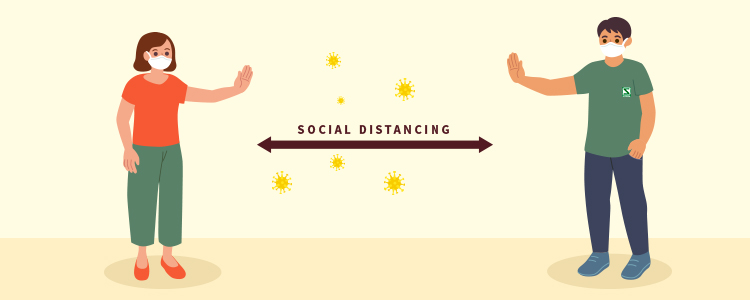
Fortunately, it is possible to avoid getting infected by coronavirus if adequate and prudent steps are taken as advised. We have seen how over the past months the concept of social distancing has become the norm. This is because the virus spreads from person to person. It is important to remember that no vaccine for the infection has yet been discovered. Therefore, it is in our best interests to avoid getting exposed to the virus. It is best to stay 6 feet away from any individual. When an infected person talks, coughs or sneezes, respiratory droplets carrying the virus are released into the air and they can easily be inhaled by another person within 6 feet. This is how the infection spreads. Below is a list of steps that should be taken by everyone to ensure their own and others’ safety.
- Wash hands frequently: Wash your hands frequently with soap for 20 seconds. This should especially be done after coughing, sneezing, coming home from outside, handling groceries from shops, etc.
- Avoid touching your eyes, nose, and mouth if your hands are unwashed.
- In case of the unavailability of water to wash hands, a hand sanitiser may be used to cover all surfaces of the hands.
- Avoid close contact with people who are sick, even if they are family members. It is best to stay 6 feet away from everyone, be it a sick person or an asymptomatic one.
- Avoid crowds and gatherings of any kind.
- It is important to maintain distance from others, especially for those individuals who fall under the high-risk group.
- Cover your mouth and nose when going out, and when around other individuals. A clean cloth can be used. Avoid putting a cloth on very young children or on individuals who have trouble breathing. Also, the cloth mask is not a substitute for social distancing, and both must be observed.
- Cover your coughs and sneezes even when alone and throw used tissues in the trash immediately. If a tissue is not available use the elbow rather than the hand to cover your mouth. Wash your hands immediately after with soap.
- Clean and disinfect frequently touched surfaces in your house and disinfect groceries etc., that you bring home from outside. You may use detergent, soap, or a household disinfectant.
- Watch out for symptoms and be aware of your own and your family members. health status. Monitor temperature frequently. Watch out for fever, cough, or shortness of breath.
- Allow health workers to carry out their jobs in the smoothest manner possible. Do not disrupt their work and do not approach them for trivial issues that can be dealt with at home. Also, follow the guidelines provided by your local authorities and cooperate with them.
- Lastly, but equally importantly, stay home as much as you can. Any tasks that can be avoided at the moment must be postponed to a later date. Plan your outings well in advance and make the most of one visit to carry out maximum errands. It is also best that only one person may go out from one house, and thorough disinfection must be done upon return. If your work requires you to step out, follow all precautions religiously. Also, limit ordering products or services online. The worker that steps out to carry out your order can be a source of infection to himself as well as others. It is best to observe staying at home and stepping out only when needed.
Conclusion
Staying informed and planning judiciously are important to fight the current situation collectively. Now more than ever we need to stay united (while distancing ourselves) to reduce the number of cases and eventually control this infection until a vaccine is found. Being cautious and careful can help us all stay healthy and take care of each other.
More Articles

How To Identify Possible Food Intolerances Without Guessing
Discover practical ways to identify possible food intolerances, track symptoms, recognize patterns, and use structured elimination methods with professional guidance.

Insulin Resistance: Early Signs, Causes & Prevention
Explore insulin resistance, its early warning signs and common causes, along with practical lifestyle habits that can support healthy blood sugar and metabolism.

10 Foods That May Help Maintain Healthy Vitamin D Levels
Learn about 10 nutrient-rich foods that may help maintain healthy vitamin D levels and contribute to strong bones, muscle function, and immune health.

7 Bedtime Drinks That May Support More Restful Sleep
Learn about seven soothing bedtime drinks that may promote relaxation, support better sleep quality, and help you unwind before bedtime.

Digital Eye Strain: Why Your Screens May Be Hurting Your Eyes
Discover how prolonged screen time causes digital eye strain, its common symptoms, and practical ways to reduce discomfort and protect your eye health.

Brain Fog vs. Poor Concentration: What's the Difference?
Brain fog and poor concentration can feel similar but have different causes. Learn how to recognize the symptoms, understand triggers, and improve mental focus.